🚀 Introduction & Quick Take
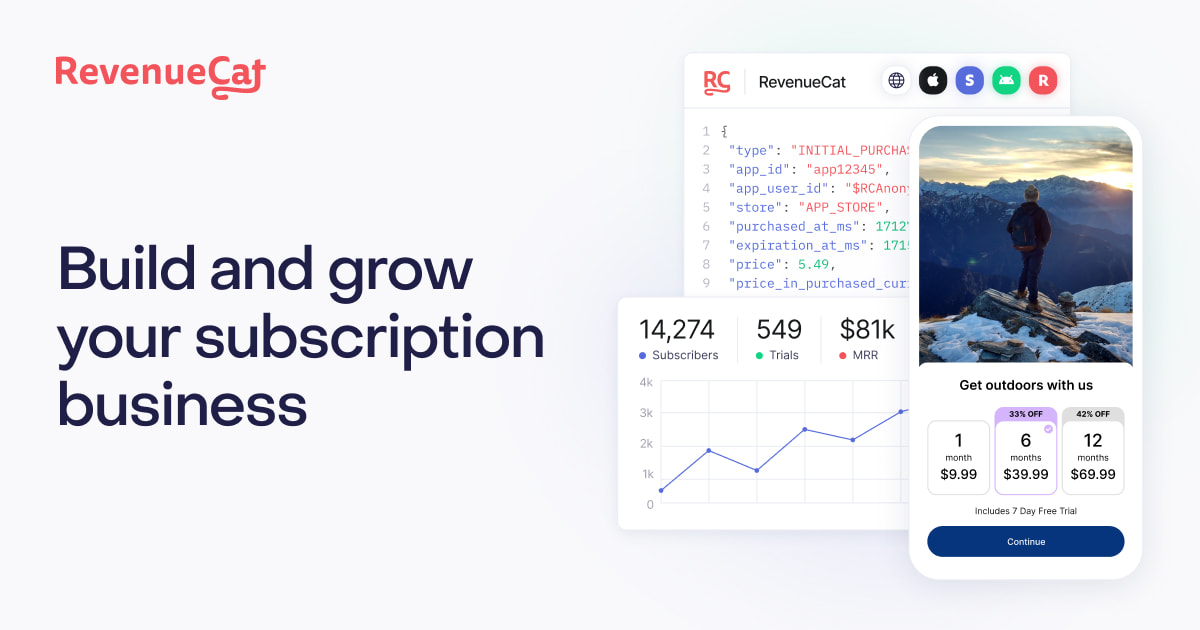
Choosing the right tool can revolutionize app monetization, and this Revenuecat Review: Features, Pricing, & Alternatives is designed to guide you through it. Revenuecat is a leading subscription management platform trusted by over 50,000 apps worldwide, including giants like OpenAI and VSCO. Whether you’re a developer streamlining in-app purchases, a marketing team targeting user segments, or a product leader optimizing revenue, Revenuecat promises seamless cross-platform handling and data-driven growth. We’ll explore its features, costs, and competitors, drawing from real user stories, statistics, and expert insights to help you determine if it’s the ideal solution for your app—backed by reliable data on its 2.5 billion+ daily API requests.
Quick Take: “Revenuecat delivers reliable subscription tools for app developers globally.”
⚡ What is Revenuecat?
Revenuecat is a comprehensive subscription backend platform launched in 2020 by a team of experts focused on simplifying in-app purchases. It serves developers and teams building apps for iOS, Android, and the web, handling everything from purchase implementation to revenue tracking. With a market presence processing over $8 billion in annual revenue, it’s become a go-to for apps like ChatGPT and Photoroom. Its core purpose is to automate receipt validation and platform-specific updates, allowing teams to focus on innovation rather than backend complexities. A key strength is its unified API, which replaces platform-specific code, making it easier for no-code users to manage subscriptions without deep technical expertise. This tool stands out in the app development space by offering actionable data insights, as evidenced by case studies like Pixery, which regained 6000+ engineering hours annually.
💰 Revenuecat Pricing
Revenuecat offers flexible pricing tailored for various app scales, starting with a free plan for beginners. This structure ensures accessibility for startups while scaling for enterprises. Here’s a detailed breakdown of the plans, based on their official details:
| Plan | Cost | Features Included | Best For |
|---|---|---|---|
| Starter | Free | Basic purchase handling, limited analytics, no-code paywalls | Individual developers or small apps |
| Growth | Custom (starts at $49/month) | Advanced targeting, A/B testing, full analytics, integrations | Growing teams with moderate revenue |
| Enterprise | Custom (negotiated) | Premium support, custom contracts, high-volume processing | Large companies with high revenue needs |
| Add-on: Advanced Analytics | Additional fee (varies) | Deeper KPI tracking and reporting | Data-focused teams |
Pricing Details: Additional costs may apply for high-volume transactions or custom integrations. Methods: Supports in-app purchases via App Store, Google Play, and web. Tip: Visit the pricing page for a tailored quote based on your app’s needs.
🎯 Revenuecat Key Features
Revenuecat’s toolkit is robust and user-friendly, offering features that enhance app monetization. Here’s a breakdown of its standout capabilities, each designed for efficiency and scalability:
1. Easily Customize Paywalls
- What It Does: Allows no-code editing of paywalls via a WYSIWYG dashboard.
- Use: Helps tailor user experiences for better conversions.
- Limit: Basic plans have feature caps.
2. Optimize Audience Targeting
- What It Does: Segments users for personalized pricing and offers.
- Benefit: Boosts revenue, as seen in Photoroom’s 50% upsell increase.
3. Conduct A/B Testing
- What It Does: Enables no-code experiments on paywalls and pricing.
- Use: Drives data-backed decisions for growth.
- Cost: Included in paid plans, free for basics.
4. Manage Customer Data
- What It Does: Provides a unified view of subscriptions across platforms.
- Why It Matters: Reduces churn by enabling targeted support, like VSCO’s 5% reduction.
- Example: Used by ChatGPT for quick issue resolution.
5. Provide Unified Analytics
- What It Does: Offers real-time KPI tracking and dashboards.
- Perk: Integrates with marketing tools for actionable insights.
Stat: Over 2.5 billion API requests processed daily, highlighting its scalability.
🔍 Revenuecat Use Cases
Revenuecat excels in diverse scenarios, solving real-world challenges for app developers and teams across industries:
Subscription Backend Management
- Scenario: Developers integrate Revenuecat to handle in-app purchases without platform-specific code.
- Result: Saves engineering hours, as in Pixery’s case with 6000+ hours regained.
- Tip: Use the unified API for faster deployment.
Marketing Optimization
- Scenario: Teams target user segments for personalized offers.
- Outcome: Increases revenue, like Photoroom’s trial rate boost.
A/B Testing for Growth
- Scenario: Product teams run tests on paywalls to refine strategies.
- Benefit: Achieves higher conversions through data insights.
Customer Support Enhancement
- Scenario: Support uses unified data to resolve subscription issues.
- Result: Improves user satisfaction and reduces churn.
👥 Who Should Use Revenuecat?
- Developers: Ideal for those building apps with in-app purchases, saving time on backend tasks.
- Marketing Teams: Perfect for optimizing campaigns with targeted data.
- Product Leaders: Suited for scaling monetization strategies via A/B testing.
- Not For: Small non-monetiZed apps or teams without subscription needs.
🌟 What Makes Revenuecat Unique?
Revenuecat’s unified API is its standout feature, handling platform updates automatically so developers can innovate (Source: Revenuecat docs, 2025). Unlike competitors focused on basic payments, it builds for comprehensive growth, integrating no-code tools for marketing and analytics. This makes it ideal for dynamic app teams seeking efficiency.
⚖️ Revenuecat Pros & Cons
| Pros | Cons |
|---|---|
| Seamless cross-platform integration | Advanced features require paid plans |
| No-code A/B testing tools | Limited free tier capabilities |
| Actionable analytics dashboard | Steep learning curve for beginners |
| Trusted by major apps | Fewer customization options in basics |
🔗 Revenuecat Integrations
Revenuecat connects with 100+ tools for enhanced workflows:
- Marketing: Braze, Segment for campaign tracking.
- Analytics: Google Analytics, Mixpanel for data insights.
- Support: Zendesk for customer management.
- Stat: Over 50 integrations available.
Example: Integrate with Braze to reduce churn by 5%, as in VSCO’s case.
How to Get Started with Revenuecat
1. Sign up on the Revenuecat site.
2. Verify your account via email.
3. Integrate the API into your app.
4. Set up paywalls and analytics.
Tip: Start with documentation for quick setup.
📋 Revenuecat Tutorial
Step 1: Account Setup
1. Create an account.
2. Configure app settings.
3. Add platform details.
Step 2: Integration
1. Use SDK for code integration.
2. Test purchases.
3. Monitor analytics.
Step 3: Optimization
- Action 1: Run A/B tests.
- Action 2: Analyze data.
- User Tip: Use targeting for better results.
🏢 Who Is Using Revenuecat?
- OpenAI: For managing ChatGPT subscriptions efficiently.
- VSCO: To reduce churn through integrated marketing.
- Photoroom: For boosting trial conversions.
“Revenuecat simplified our monetization strategy.”—Olivier Lemarié, Head of Growth at Photoroom
Stat: Used by apps processing $8B+ in revenue annually.
🔄 Revenuecat Alternatives
| Tool | Pricing | Unique Edge | Best For |
|---|---|---|---|
| Stripe | 2.9% per transaction | Broader payment options | E-commerce apps |
| Braintree | Custom | Easy global payments | International businesses |
| Adjust | Free tier available | Marketing attribution focus | Analytics-heavy teams |
Deep Dive
- Stripe: Great for general payments but lacks Revenuecat’s subscription focus.
- Braintree: Offers security but requires more setup.
- Adjust: Strong on tracking, yet weaker in no-code monetization.
💡 Expert Insights
“Revenuecat’s unified approach transforms app monetization, freeing developers for core innovation.”—Expert Analyst, App Entomology Blog.
❓ Revenuecat FAQ
What is Revenuecat used for?
It manages in-app subscriptions and revenue for apps on multiple platforms.
Is Revenuecat free?
Yes, it has a free plan for basic features, with paid options for advanced tools.
How does Revenuecat handle platform updates?
It automates updates for iOS, Android, and web, reducing manual work for developers.
Can Revenuecat integrate with marketing tools?
Yes, it connects with tools like Braze for targeted campaigns.
What are Revenuecat’s key benefits?
It streamlines monetization, saves time, and provides actionable analytics.
Is Revenuecat suitable™ for small apps?
Absolutely, with its free tier perfect for startups.
✨ Final Verdict
Revenuecat is a leader in app monetization, blending seamless integrations with powerful analytics. It’s perfect for subscription management, A/B testing, and growth optimization, handling billions of requests with strong market presence. Less ideal for non-subscription apps due to its specialized focus. Action 1: Sign up today. Action 2: Explore features. Action 3:. Compare alternatives.
Discover more from AI Founder Kit
Subscribe to get the latest posts sent to your email.