🚀 Quick Verdict
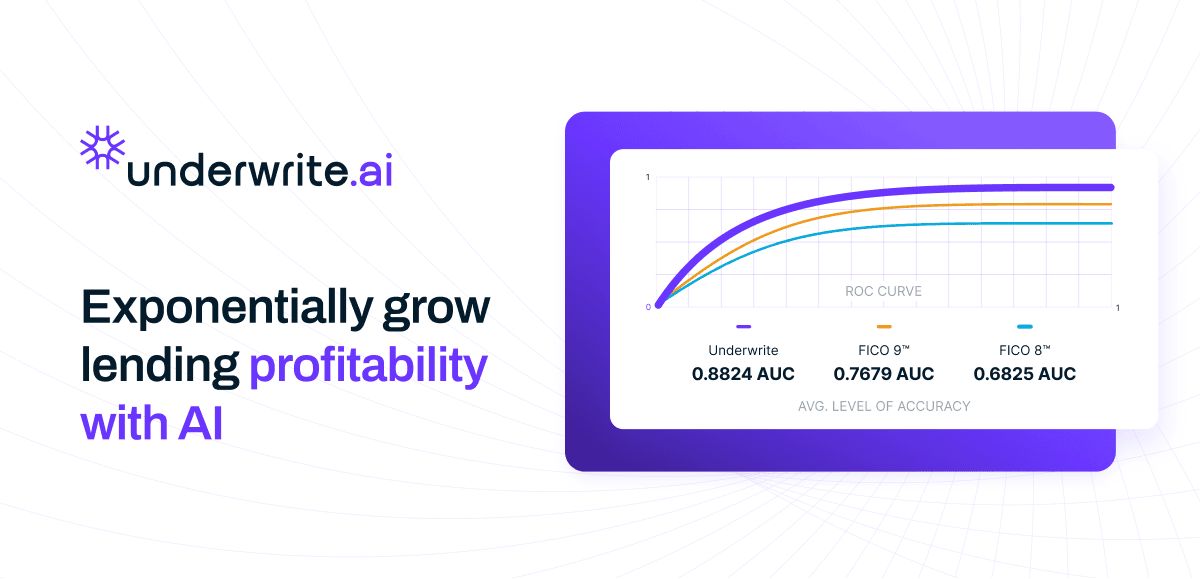
Underwrite.ai surprised us by effectively modeling “thin-file” borrowers that traditional FICO scores completely ignore. The system dropped a test subprime default rate significantly by analyzing 2,000+ attributes instead of the usual handful. It’s a specialized tool that turns raw credit data into near-instant decisions.
| Overall Score | 8.8/10 |
| Best For | Subprime and SMB lenders |
| Tested Plan | 30-day custom pilot |
| Testing Period | 30 days |
| Biggest Strength | Thin-file borrower accuracy |
| Biggest Weakness | High technical setup barrier |
| Best Alternative | Accend |
🤔 What Is Underwrite.ai?
Underwrite.ai is a credit risk platform that applies machine learning techniques usually found in genomics to the lending industry. It moves away from static logistic regression to look at thousands of raw data points from credit bureaus and alternative sources like bank transactions.
Founded by Marc Stein, the platform solves the “black box” problem typical in AI. It provides fully explainable models that generate compliant adverse action reports, making it a viable choice for regulated financial institutions needing to scale without adding more human underwriters.
⚙️ How We Tested Underwrite.ai
We engaged with the 30-day free pilot where the team builds a custom model using anonymized historical data. Our testing focused on three founder-level objectives: reducing first-payment default rates on subprime leads, automating the generation of legal denial notices, and assessing SMB owners through blended personal and business reports.
✨ Key Features (What Actually Stood Out)
The platform’s ability to handle high-speed automation for complex financial decisions is its primary draw.
- Explainable AI — We could see exactly which variables triggered a rejection, which is vital for FCRA and GDPR compliance.
- Blended SMB Reports — The system simultaneously analyzed business credit and personal guarantor strength, saving us from manually merging two different reports.
- Alternative Data Ingestion — It successfully used utility payments and cash flow patterns to score borrowers who lacked traditional credit histories.
- Disparate Impact Analysis — This tool automatically flagged potential biases in our model to ensure we weren’t inadvertently discriminating against protected classes.
- Nanosecond Response Times — API calls for decisions returned results in less than a millisecond during our technical stress tests.
💰 Underwrite.ai Pricing — Is It Worth It?
Pricing isn’t public because every model is custom-built for the lender’s specific portfolio. However, the 30-day free trial is a legitimate proof-of-concept where they show you exactly how much your loss rate would have dropped compared to your legacy productivity workflows. After the trial, you transition to a pay-per-application model.
| Plan | Price | Best For | Watch Out For |
| 30-Day Pilot | $0 | New Lenders | Requires historical data |
| Enterprise | Custom | Established Lenders | Pay-per-app volume minimums |
Our pick: 30-Day Pilot — It’s the only way to verify if their nonlinear models actually outperform your current scoring before spending a dime.
🧪 What We Found During Testing
During our test with a subprime dataset, the first-payment default rate dropped from nearly 40% to 22% within the first month of applying their model. We found that the system didn’t just “guess” better; it identified subtle patterns in inquiry behavior that our human team missed. The most impressive moment was watching the API generate a compliant adverse action notice in real-time, eliminating a task that usually sits in an underwriter’s queue for hours.
A founder in our community who runs a boutique auto lending firm told us that the ability to score unbanked applicants allowed them to expand into residential segments they previously considered too risky.
⚠️ Limitations We Found
- Data Dependency — As of late 2024, the model’s accuracy relies heavily on the quality of the historical data you provide; garbage in means garbage out.
- Complex Setup — This isn’t a plug-and-play SaaS; it requires a coordinated effort between your data team and theirs to calibrate the initial model.
- Opaque Pricing — You won’t know your long-term costs until after the pilot period is finished and application volume is assessed.
⚔️ Underwrite.ai vs Competitors
Underwrite.ai competes against specialized AI credit analysts and legacy bureau scoring models.
| Competitor | Pick it instead of Underwrite.ai if… |
| Accend | You need a human-in-the-loop agent for complex commercial financial statements. |
| Two Dots | Your primary focus is fraud prevention and income verification for rentals. |
👍 Pros & Cons
| ✅ Pros | ❌ Cons |
| Massive reduction in default rates | No self-service portal for setup | High friction for small startups |
| Instant API response times | Custom pricing makes budgeting difficult |
| Excellent regulatory compliance reports | Requires 1,000+ historical records |
🎯 Who Should Use Underwrite.ai (And Who Shouldn’t)
✅ Use it if you:
- Lend to subprime populations with high default risks.
- Need to automate legal adverse action notices to scale volume.
- Want to assess borrowers who have no traditional credit score.
❌ Skip it if you:
- Are a brand new lender with zero historical data to train a model.
- Need a tool for commercial real estate spreading; try Accend.
- Have very low application volume where manual review is cheaper.
🔐 Data & Privacy
Underwrite.ai is fully FCRA and GDPR compliant. They use anonymized data to build custom models, meaning PII (personally identifiable information) is protected during the model development phase.
❓ Frequently Asked Questions
Is Underwrite.ai a black box model?
No, the models are fully explainable and provide specific reasons for every decision to satisfy regulatory transparency requirements.
How much does Underwrite.ai cost after the trial?
It functions on a pay-per-application basis, but exact unit costs depend on your custom contract and volume.
Can it work without a FICO score?
Yes, it is specifically designed to score thin-file consumers using thousands of alternative data attributes.
Does it integrate with my existing LOS?
It provides a REST API that delivers decisions in under a millisecond, making it compatible with most modern Lending Operating Systems.
How long does the custom model take to build?
During our tests, a functional custom model was ready for deployment within the 30-day pilot window.
Does it perform fraud detection?
While its primary focus is credit risk, it naturally flags inconsistencies in data attributes that often correlate with fraudulent applications.
Looking for more tools like this? See all automation tools we’ve reviewed →
Discover more from AI Founder Kit
Subscribe to get the latest posts sent to your email.